In a time in which values often seem to be measured by speed, success, and personal achievements, there exist those quiet, almost unnoticeable moments that restore faith in what is essential: in kindness, togetherness, and a sincere desire to help others. Such moments do not come with great noise, do not seek attention or recognition, yet they leave a mark that is not easily erased. It is precisely through a series of volunteer activities carried out across Bosnia and Herzegovina during March 2026 that young people demonstrated that humanity is not an idea, but a practice; not an abstract concept, but concrete action that changes everyday life.
In Sarajevo, students, within the premises of the association Pomozi.ba, became part of a much larger system – a system of solidarity that functions thanks to people willing to invest time, effort, and care. During the month of Ramadan, when the scope of humanitarian work significantly increases, their presence carried particular weight. The activity was not only physical engagement, but also a lesson in responsibility and organization. Students were divided into teams, where each segment of work had a clearly defined purpose. While one team carefully inspected and sorted clothing, paying attention to every detail and the quality of donated items, another coordinated transport and logistics, ensuring that packages were prepared stably and safely for distribution. A third team worked on sorting hygiene supplies, where precision and responsibility were of key importance.
What makes this activity particularly significant is not only the execution of tasks, but the way in which the students approached the work. Through the process, they developed an eye for detail, but also an awareness that every action they take directly affects the end users. A special moment occurred when they independently devised a system for labelling packages, thereby further improving work efficiency. That moment was not only an example of creativity, but also proof of their ability to recognise a problem and offer a solution – a skill that goes beyond the framework of the activity itself.
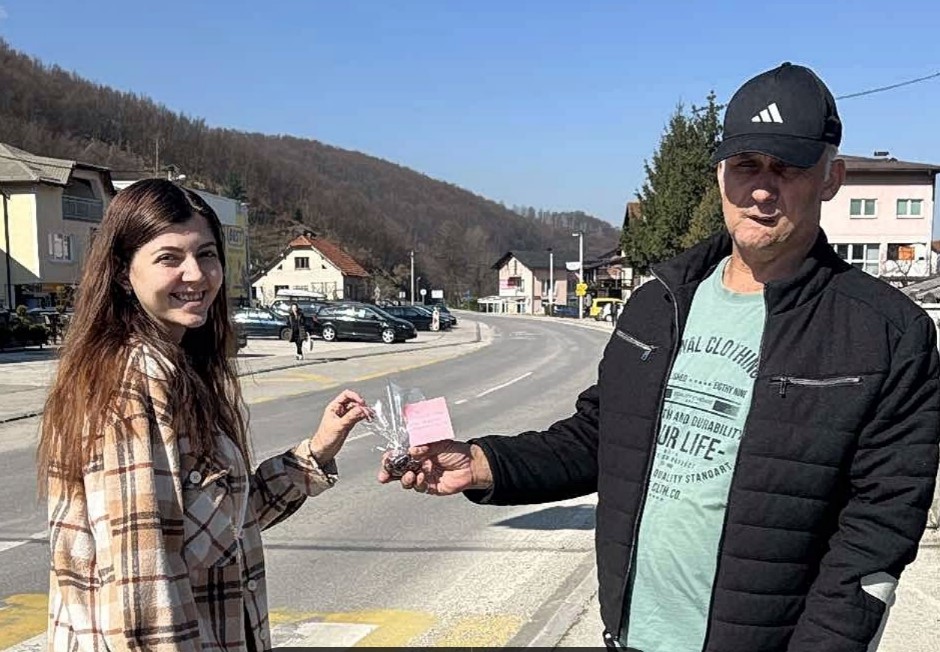
At the same time, in Busovača, a different but equally powerful story was unfolding. Through the making of small gifts from dates, students demonstrated how a small gesture can carry great significance. The activity began with planning and the division of tasks, where everyone found their role: from writing messages, to packaging, to the final shaping of the gifts. The process of creation was just as important as the distribution itself, as it allowed students to develop a sense of belonging and cooperation through joint work.
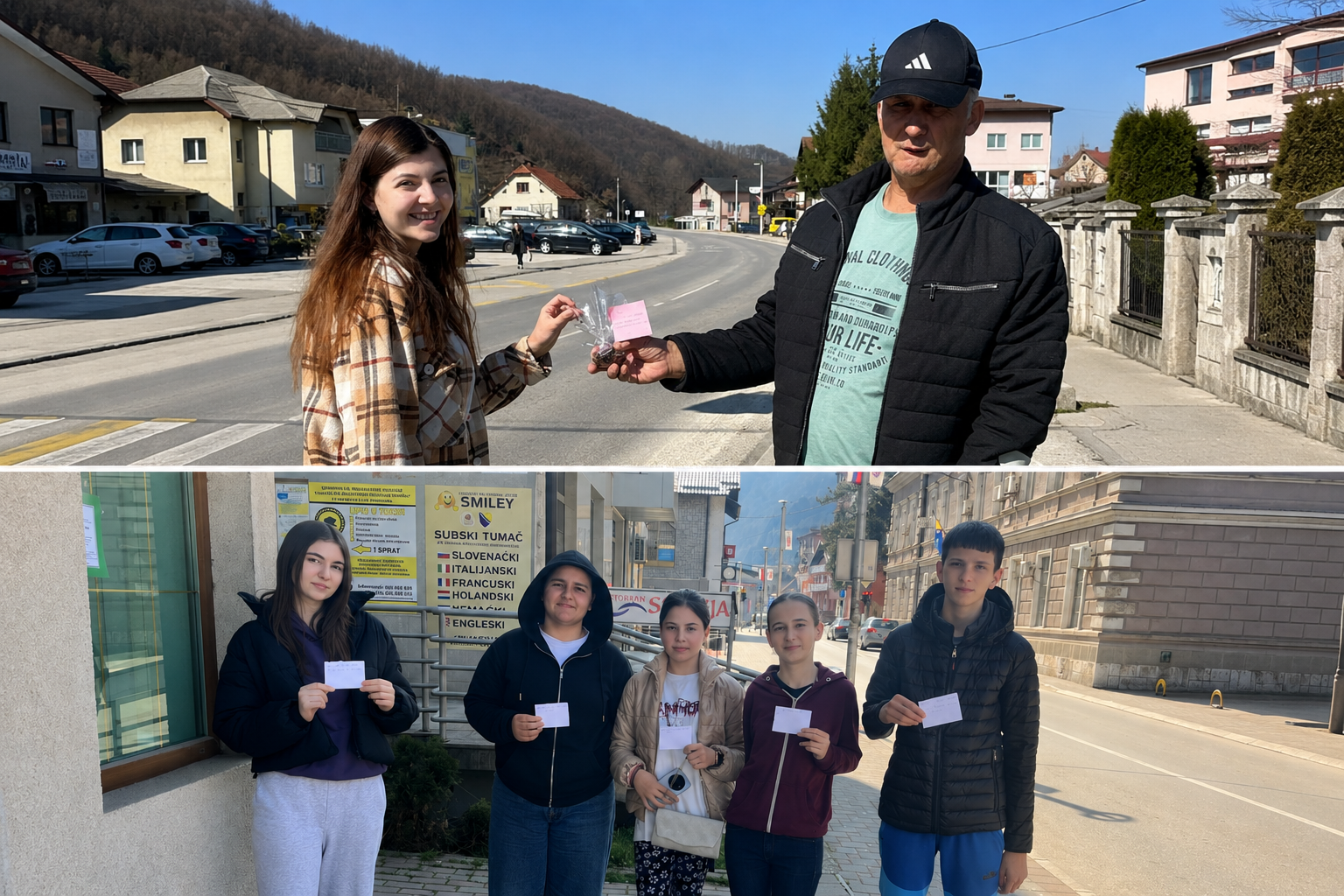
When the gifts were finally distributed to passersby, employees in local institutions, and elderly individuals, what occurred was not merely an exchange of items, but an exchange of emotions. Smiles, brief conversations, and expressions of gratitude created an atmosphere that reminds us that a community exists precisely through such small but meaningful interactions.
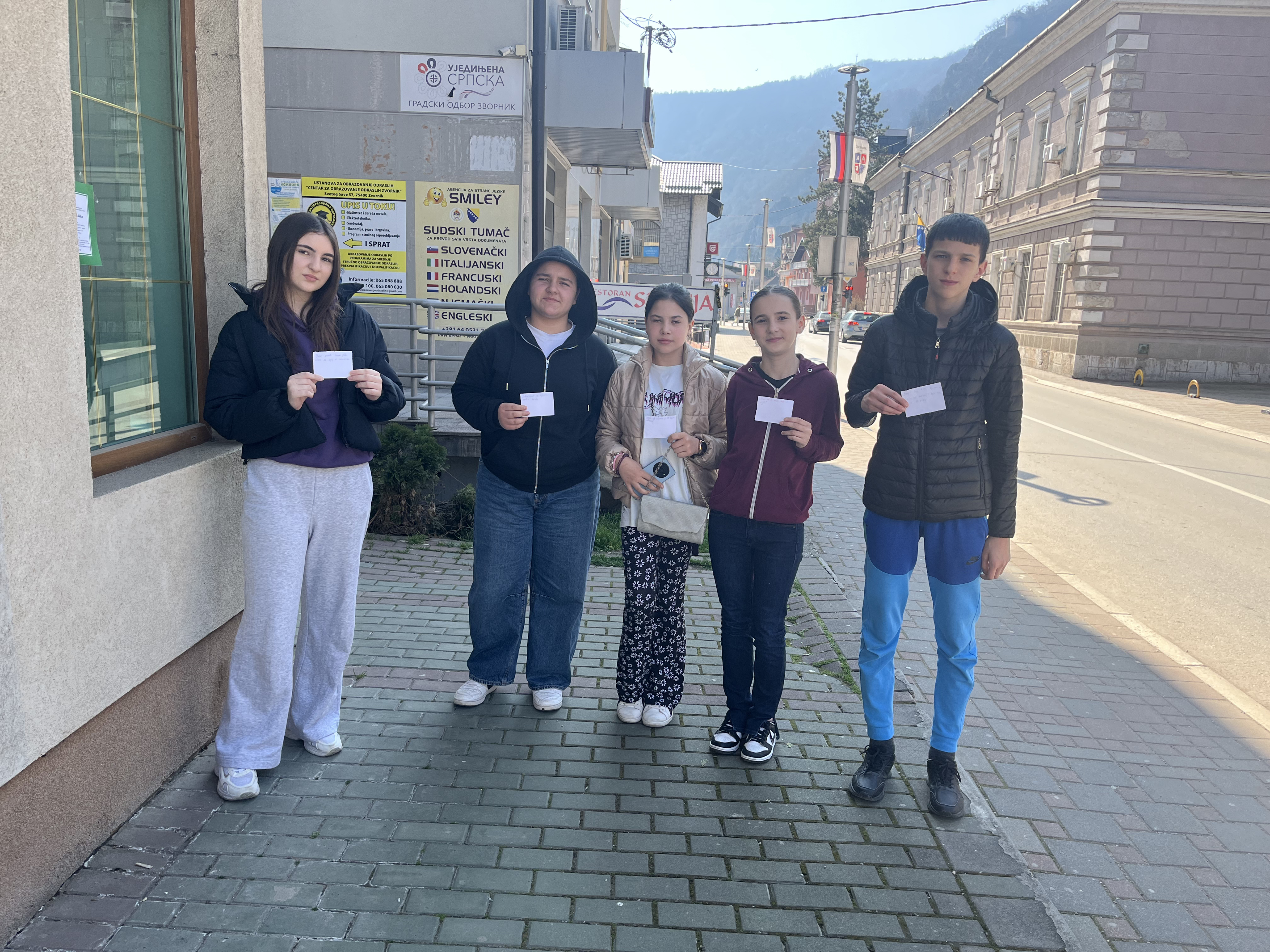
In Zvornik, the focus was on the inner world of the individual, on understanding happiness and its true meaning. On the occasion of the International Day of Happiness, students, through discussion and practical activities, explored what happiness represents for them and to what extent it depends on material things. Through simple examples from everyday life, such as socializing, family support, or success at school, they learned to recognize the value of small moments. Writing messages about happiness and distributing them within the local community further extended this idea beyond the classroom. In this way, students became carriers of the message that happiness is not something to wait for, but something actively created through relationships, gratitude, and presence.
In Živinice, attention was directed toward those who have no voice – abandoned animals. Through discussion about the issue of stray dogs and their position within the community, students developed empathy and awareness of the responsibility humans have toward other living beings. The practical part of the activity, the making of feeders, was a combination of creativity and functionality. Using available materials, students jointly devised solutions that can have a long-term impact. This activity was not only help for animals, but also a lesson in care, responsibility, and the importance of action.
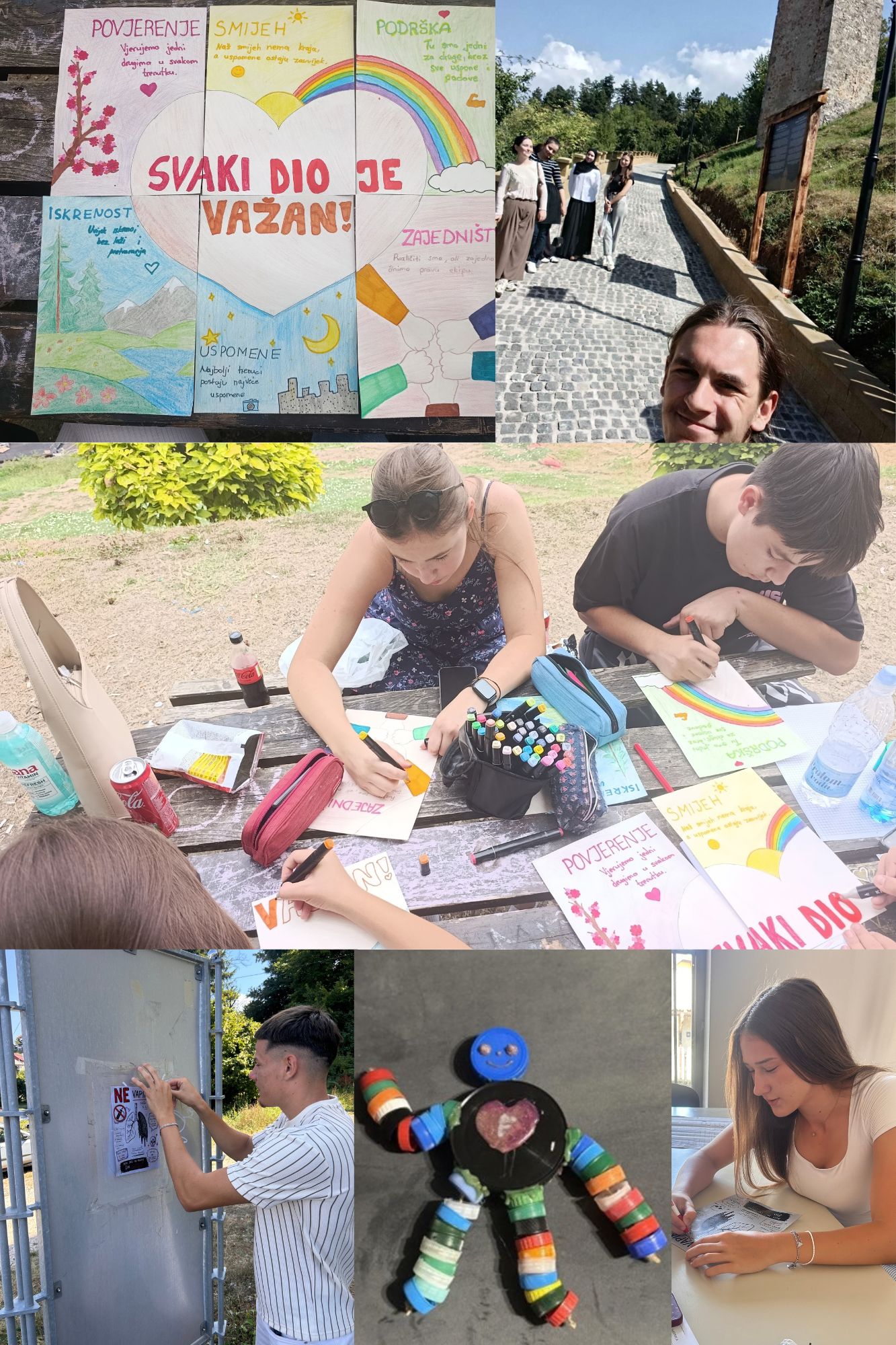
In Bugojno and Srebrenik, topics that often remain unspoken were opened: stress, emotional states, and mental health. Through workshops, students had the opportunity to recognize their own emotions, understand the causes of stress, and learn techniques that can help them in everyday life. Activities such as “recognizing triggers” or creating a “calm-down box” enabled them to develop personal strategies for coping with challenges.
Particular value lay in the exchange of experiences and open conversation, which contributed to creating a sense of safety and mutual understanding. The creation and distribution of messages of support within the community further emphasized the importance of empathy and solidarity, reminding us that conversation is often the first step toward a solution.
In Jablanica, through the action of arranging the space in front of the museum “Battle for the Wounded on the Neretva,” students demonstrated how care for the community also implies the preservation of cultural and public spaces. Through joint work, cleaning, and arranging, they developed a sense of responsibility toward their surroundings, as well as awareness of the importance of cultural institutions. This activity combined education, physical work, and socializing, creating an experience that goes beyond classical learning.
All these activities, although different in their approach, share a common essence – the active participation of young people in building a better society. Through concrete tasks, students learned that change does not occur on its own, but requires engagement, initiative, and a willingness to take responsibility.
What is particularly encouraging is the fact that in these activities, students showed much more than expected – they demonstrated maturity, creativity, the ability to cooperate, and above all, a sincere desire to contribute. In every one of their actions, there was a clear awareness that even the smallest contribution can have great significance.
And perhaps it is precisely in that simple yet powerful truth that the meaning of everything lies – that the world is not changed by big words, but by small, consistent steps. That humanity is not something learned only through theory, but something lived through actions.
Because every shared message, every packed package, every crafted feeder, and every sincere conversation leaves a trace. And when those traces come together, they form a path – a path toward a society that understands, supports, and does not forget what it means to be human.