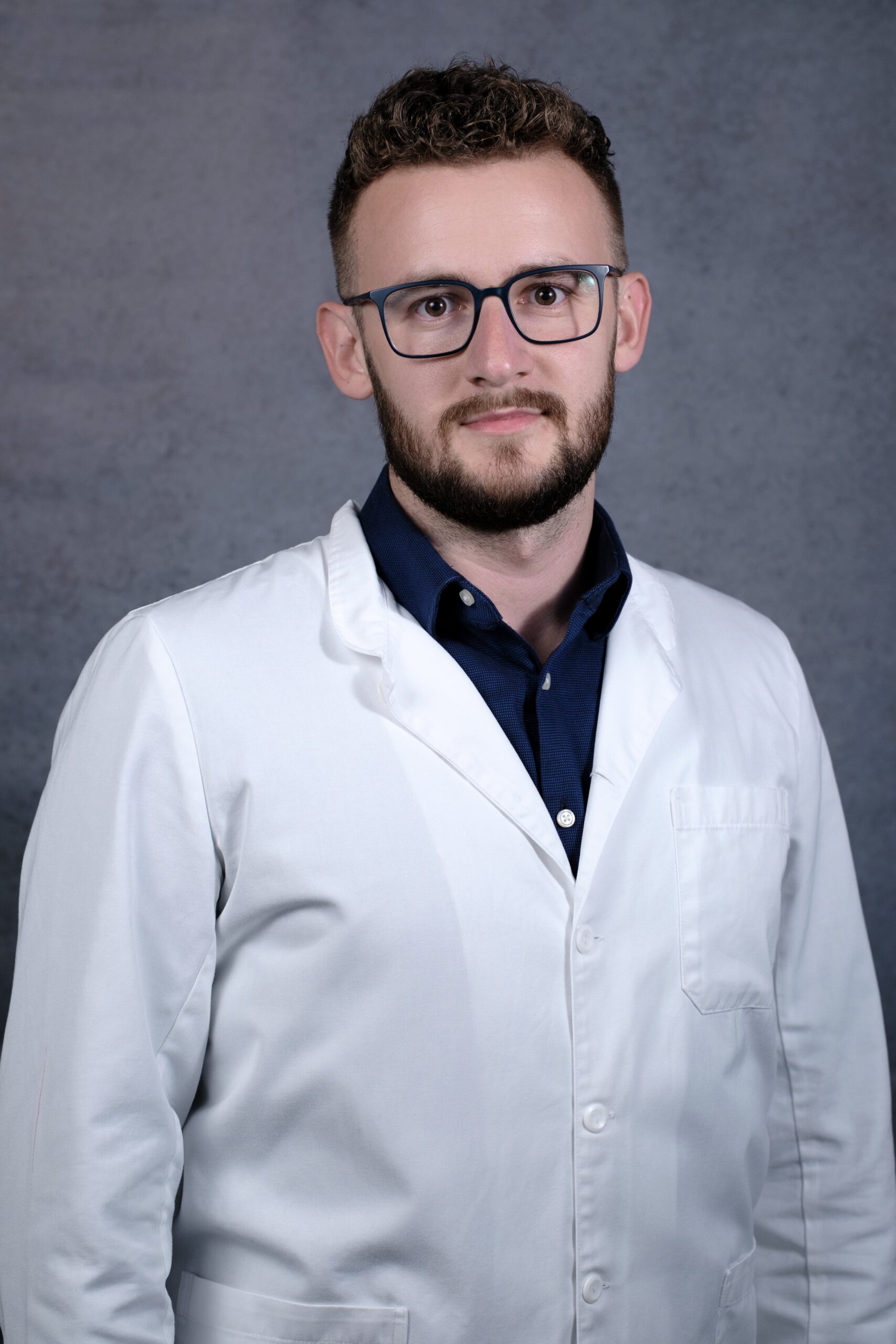
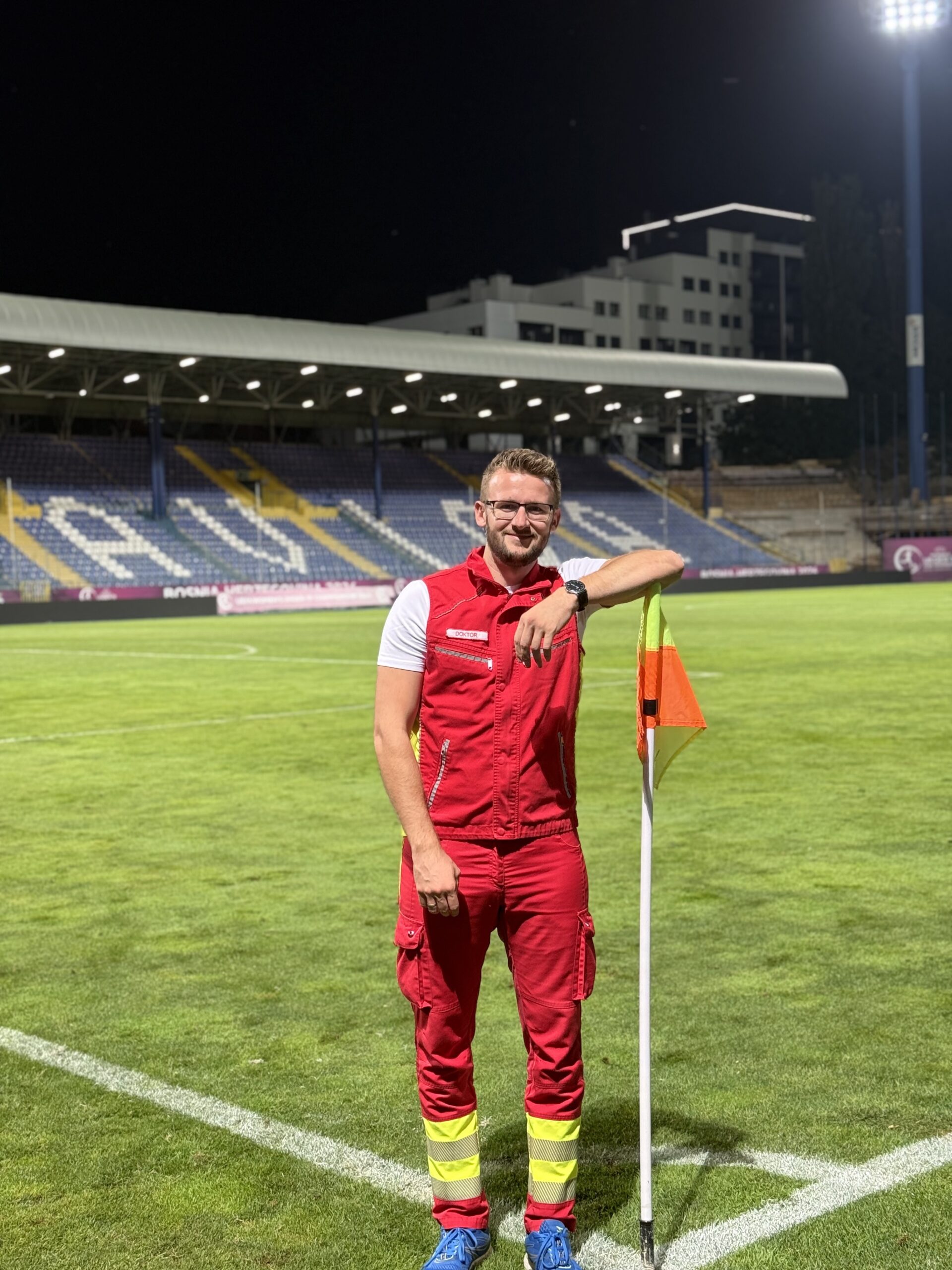
This month, as part of our “Interview of the Month” article we spoke with Vedad Huseinbašić, a medical doctor employed at the Sarajevo Canton Institute for Emergency Medical Services and a long-time scholarship recipient and volunteer of the Hastor Foundation. During the interview, Vedad shared the details of his educational and professional journey, the experiences at the international exchange programs, but also the importance of volunteering, which even today take up a special place in his life.
- For beginning, could you briefly introduce yourself to our readers and tell us something about your professional journey?
My name is Vedad Huseinbašić. I am born in Fojnica, where I finished elementary school. I continued my High-school education at Turkish-Bosnian Unsko-Sanski College in Bihać. I graduated from the Faculty of Medicine at the University of Sarajevo in 2023. I was part of several student exchange programs: Erasmus +, IFMSA in Istanbul, as well as CEEPUS exchange in Graz. Since February 2024., I’ve been working as a medical doctor at the Sarajevo Canton Institute for Emergency Medical Services. In terms of volunteer experience, in addition to my engagement with the Hastor Foundation, I would highlight the education programmes and activities within the BIMA Medical Association – we organise free specialist medical examinations and services several times a year in returnee communities across Bosnia and Herzegovina.
- As a medical doctor and employee of Sarajevo Canton Institute for Emergency Medical Services, often do you encounter with health problems caused by the high temperatures during the summer months?
During the summer months, we encounter such health problems very frequently, especially during heat waves when temperatures remain high for several consecutive days. High temperatures cause blood vessels to dilate in order to cool the body, but if too much fluid is lost, blood volume decreases, the brain receives less oxygen and nutrients, which can lead to dizziness, syncope and even heat stroke. In practice, we most commonly encounter dehydration, heat exhaustion, electrolyte imbalances, worsening of chronic illnesses, and, in the most severe cases, heat stroke. Patients with pronounced symptoms should immediately seek medical attention at the nearest healthcare facility so that appropriate treatment can begin as soon as possible. What many people do not know is that a body temperature above 40oC can lead to cell damage, impaired brain function and damage other vital organs. That is why heat stroke is a medical emergency and a life-threatening condition that requires rapid cooling and immediate medical intervention.
- Which are the most frequent mistakes that people make during periods of extreme heat, which can seriously endanger their health?
The most common mistake is that people underestimate the effects of high temperatures and attribute the first symptoms to fatigue. In practice, we often see that they do not drink enough fluids, skip breakfast, spend time in direct sunlight between 10 a.m. and 5 p.m., engage in intense physical activity during the hottest part of the day, or leave children and older adults in parked vehicles. A particular problem is that thirst is not always a reliable factor of dehydration – by the time we feel thirsty, the body has already begun to lose a significant amount of fluid. From medical perspective, it is important to distinguish between heat exhaustion and heat stroke. Heat exhaustion is characterized by excessive sweating, dizziness and nausea, whereas heat stroke is a life-threatening condition in which body temperature often exceeds 40oC, accompanied by altered consciousness and the failure of effective thermoregulation. At that point, every minute matters because prologued hyperthermia can lead to damaged braid, heart, kidneys and other organs.
- What are the first signs of heat exhaustion or sunstroke, and how should people respond if these occur? The first sign that the body is no longer able to maintain a normal body temperature include severe fatigue, headache, dizziness, nausea, muscle cramps, excessive sweating and feelings of weakness. If no action is taken at that point, the condition can progress to heast stroke, which is recognized by althered consciousness, disorientation, confusion, loss of consciousness or convulsion. This is a medical emergency that requires immediate medical assistance. The correct response is to move the person immediately into the shade or an air-conditioned space, stop any physical activity, remove excess clothing and begin active cooling using cold compresses or by pouring cool to cold water over the body, while directing a fan towards the person is one is available. If the person is conscious, they should be given small amounts of water or electrolyte drinks. However, if consciousness is impaired nothing should be administrated orally due to the risk of aspiration; instead, emergency medical services must be called immediately.
Interestingly, the rate at which body temperature is lowered directly affects the treatment outcome. In emergency medicine, there is a “cool first, transport second” rule – when heat stroke is suspected, the priority is to begin cooling immediately, as any delay increases risk of permanent organ damage and death. That is precisely why early recognition of symptoms can be crucial for saving a person’s life.
- What advice would you give to citizens to help them protect themselves from high temperatures and protect their health during summer?
The most important recommendation is that citizens shouldn’t wait for their bodies to show serious signs of exhaustion. It is essential to drink fluids regularly and avoid direct exposure to sun between 10 a.m. and 5 p.m., wearing lightweight and light-colored clothes and, whenever possible, stay in cool indoor spaces. Special attention should be paid to older adults, children and people with chronic illnesses, as the consequences of high temperatures can develop much quicker in these groups.
When sweating heavily, especially after prologued exposure to heat or physical activity, replacing water alone is not enough. Electrolytes, primarily sodium and potassium, are also lost, so oral rehydration solutions or electrolyte drinks may be beneficial in these situations. I also recommend daily use of sunscreen with sun protection factor (SPF 30 or SPF 50), as it significantly reduces the risk of sunburn, photoaging of the skin, and, in long term, the development of skin cancer. For people who regularly take medication such as diuretics or have chronic illnesses, it is important to consult their doctor during heat waves, as certain therapies may increase the risk of dehydration.
A simple but useful indicator is the colour of urine – light yellow generally indicates good hydration, while darker urine often means that the body is lacking fluids. Finally, I always emphasise that prevention is the best medicine. A few simple habits can significantly reduce the risk of serious complications and help spend the summer safely and in good health.
- Finally, do you have a message or piece of advice you would like to share with the scholarship recipients, alumni, and all readers of the Hastor Foundation Newsletter?
Knowledge has the greatest value when we share it with others. Let this summer remind us that taking care of our health is both personal responsibility and an act of solidarity towards the people around us. I am proud to be part of the Hastor Foundation community, which has taught us that success is not only what we achieve for ourselves, but also what we do for others.